

Åsa Borin: Reports on administrative burden
Words from the management: Administrative burden is not an isolated phenomenon. It is a systemic problem in which both external governance and internal ambitions intertwine.
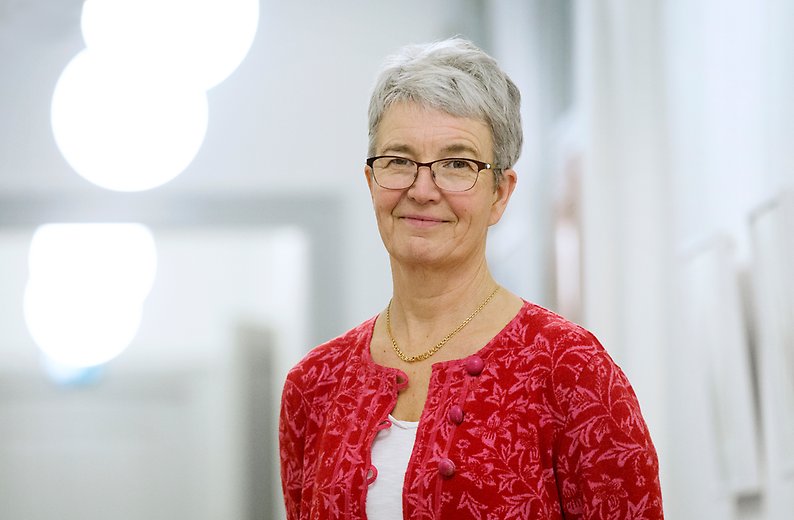
Åsa Borin, University Director. Photo: Rickard Kilström
Two reports were presented in early autumn – the Swedish Agency for Public Management’s report Generella regelverk ger inga avgörande konsekvenser för universitet och högskolor [General regulations have no decisive consequences for universities and colleges] and the Association of Swedish Higher Education Institutions’ (SUHF’s) report Ökad kontroll och ökad byråkratisering – Hur kan onödig administration vid universitet och högskolor minska [Increased control and increased bureaucracy – How can unnecessary administration at universities and colleges be reduced] (SUHF’s third and final report in the series on increased control and increased bureaucracy).
The Swedish Agency for Public Management’s report gives the impression that the administrative burden from general regulations is manageable and has little impact on the core tasks of higher education institutions. However, page 47 of the report clearly shows that most university directors and chief administrative officers do not share this opinion. This difference between the Swedish Agency for Public Management’s conclusion and the views expressed from those in the sector – which is also highlighted in SUHF’s reports on increased control and bureaucracy – makes the Swedish Agency for Public Management’s assessment appear inadequate. Administrative burden is not an isolated phenomenon. It is a systemic problem in which both external governance and internal ambitions intertwine.
SUHF’s report shows that unnecessary administration often arises from overambitious interpretations of regulations, a lack of coordination, and a culture in which the fear of making mistakes leads to excessive documentation and control. It is not just what is done, but how often, by whom and at what level. When each organisational level adds its own layer of control, it creates a snowball effect that crowds out core activities.
A particularly heavy part of the administrative burden arises from the authorities that are tasked with oversight of the activities. The Swedish Higher Education Authority (UKÄ), research funders, and other supervisory authorities contribute through extensive evaluations, short response times and overlapping assignments. UKÄ itself has noted that a high level of detail and a lack of coordination increase the burden. When the purpose of an evaluation is unclear, it not only makes planning more difficult, but also reduces the possibility of using the information gathered for operational development.
According to the Swedish Agency for Public Management, the solution is to make efficiency improvements within the higher education institutions. However, SUHF’s analysis shows that efficiency improvements are not neutral – they consume resources and run the risk of shifting the workload to researchers and teachers. It is therefore crucial that simplifications are based on a holistic perspective and focus on the core task of higher education institutions, i.e. to conduct high-quality education and research. This is linked to the need to understand the distinctive nature of higher education institutions – their unique mission, collegial governance models and international anchoring, as emphasised in the SUHF report. Treating universities as general authorities is tantamount to ignoring this distinctiveness. Governance based on trust, understanding and dialogue is required – not control and uniformity.
We need governance that recognises the complexity of academia and promotes long-term knowledge development. The Swedish Agency for Public Management’s report is part of the discussion – but SUHF’s report shows that we need to delve deeper. It is time to see universities and colleges for what they are: institutions that support society and need freedom to be able to make a contribution.
This text is written by Åsa Borin, University Director. It appears in the section ”Words from the University’s senior management team”, where the management team take turns to write about topical issues. The section appears in every edition of News for staff.