

Åsa Borin: Towards a common platform for e-infrastructure
Words from the management: By joining forces, we higher education institutions can become stronger and unite the sector’s voice in national and international contexts.
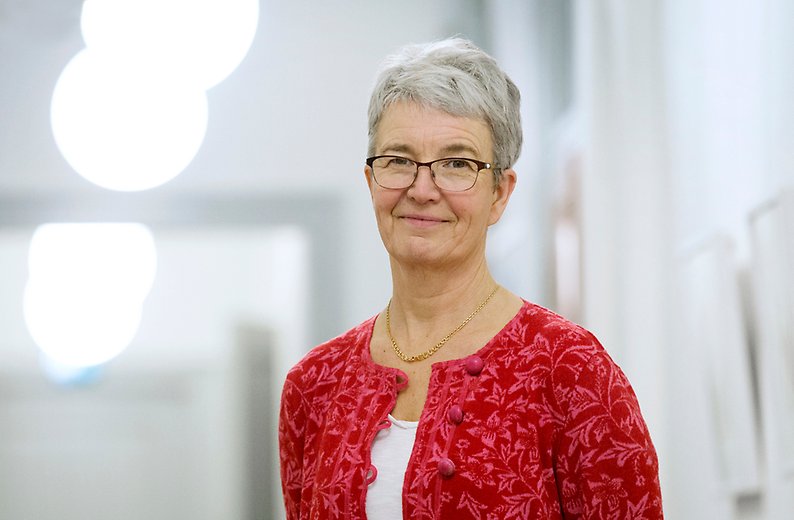
Åsa Borin, University Director. Photo: Rickard Kilström
The autumn term has just begun and the students are back on campus, which is wonderful. The buzz of students on campus is really energising. As usual, there are a number of issues that require attention. One current issue is how higher education institutions manage e-infrastructure. Rapid digitalisation and the resulting increased demand for good system support place heavy demands on resources, and the costs are extensive, which means that it is inefficient for each higher education institution to deal with these issues individually.
At the end of spring, all of Sweden’s higher education institutions took a position on a proposal to work together on issues related to e-infrastructure. The proposal was preceded by an inquiry appointed in autumn 2023 by the Association of Swedish Higher Education Institution (SUHF), after consultation with the Swedish Council for Higher Education, the Swedish Research Council, and the Ladok Consortium. The inquiry, entitled “Framtidens e-infrastruktur för högre utbildning” (The e-infrastructure of the future for higher education), proposed several changes to clarify the tasks of the various actors and improve the national coordination of e-infrastructure needed for higher education in Sweden.
At its General Assembly meeting in October 2024, SUHF decided to appoint a working group for e-infrastructure. Working on behalf of the higher education institutions, this working group was tasked with leading the efforts to design and facilitate the establishment of a common e-infrastructure system that the higher education institutions need for their activities. In other words, the assignment was expanded to include e-infrastructure for all of the higher education institutions’ activities, not just for education.
SUHF’s working group presented its report to the General Assembly in the spring, and proposed a common platform for the higher education institutions’ e-infrastructure. The working group considered it a priority to quickly establish the structures and working methods needed to identify common priorities and drive e-infrastructure development work. The proposed structure is similar to the structure that has been successful for the Ladok Consortium – a general meeting involving all participating higher education institutions, an elected steering group to drive the general meeting’s overall decisions, and an operational secretariat that implements and acts as process leader.
As mentioned, all of Sweden’s higher education institutions have decided to participate by signing the so called handshake agreement, and a kick-off meeting for the continued work was held in mid-June. Work is now underway to draw up a consortium agreement, and the first meeting is scheduled to be held in October. It is impressive how quickly the working group has managed to move the issue forward.
It is through joint efforts by the higher education institutions that we can ensure control over our e-infrastructure and, in this way, also secure access to a range of appropriate e-infrastructure for all of our activities. This is an excellent example of how, by acting together, we as higher education institutions can become stronger and unite the sector’s voice in national and international contexts, in this case with regard to e-infrastructure. For the initiative to be a success, it will be necessary for all higher education institutions to be willing to cooperate and contribute expertise from their own institutions.
This text is written by Åsa Borin, University Director. It appears in the section ”Words from the University’s senior management team”, where the management team take turns to write about topical issues. The section appears in every edition of News for staff.